
SON VELL
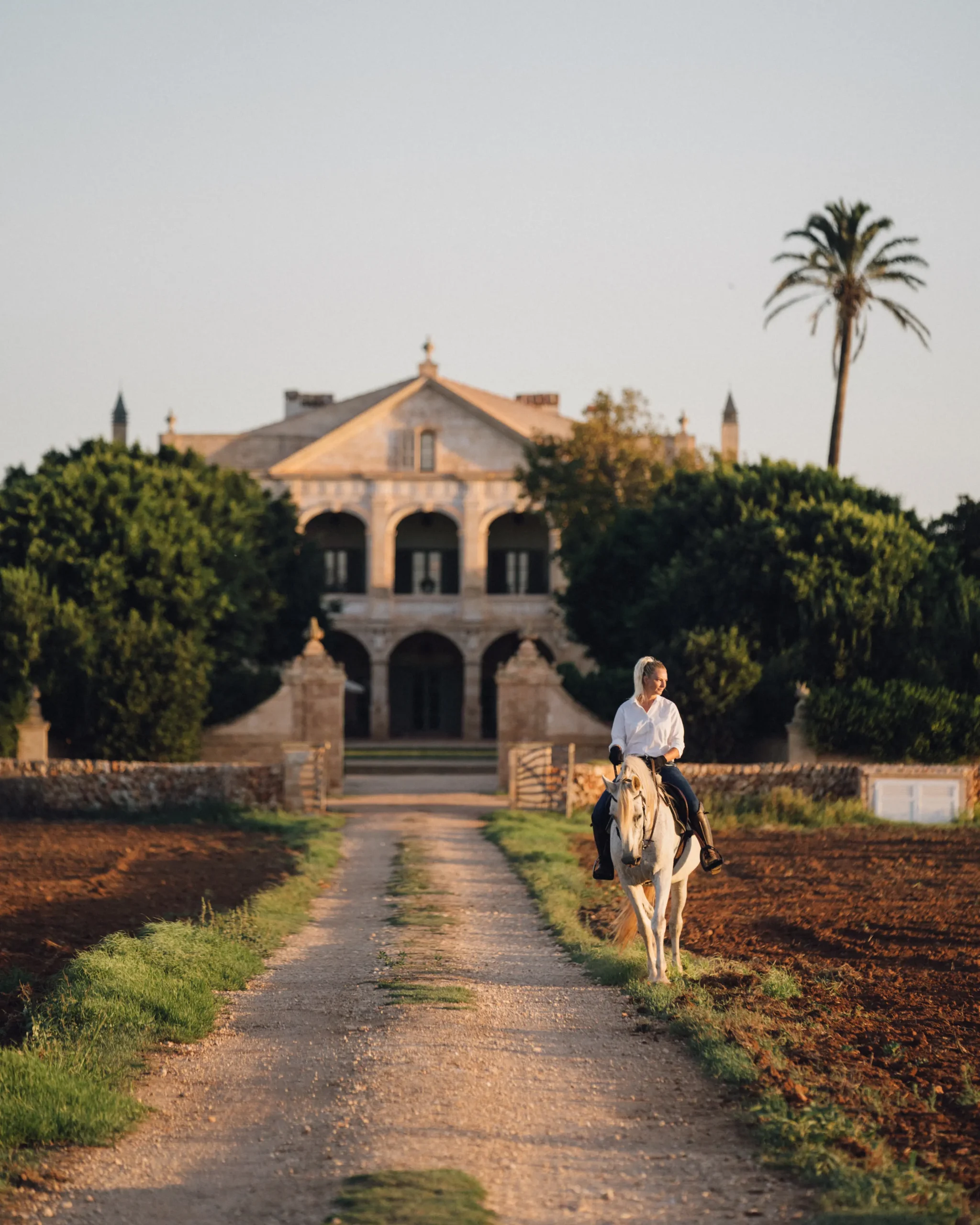
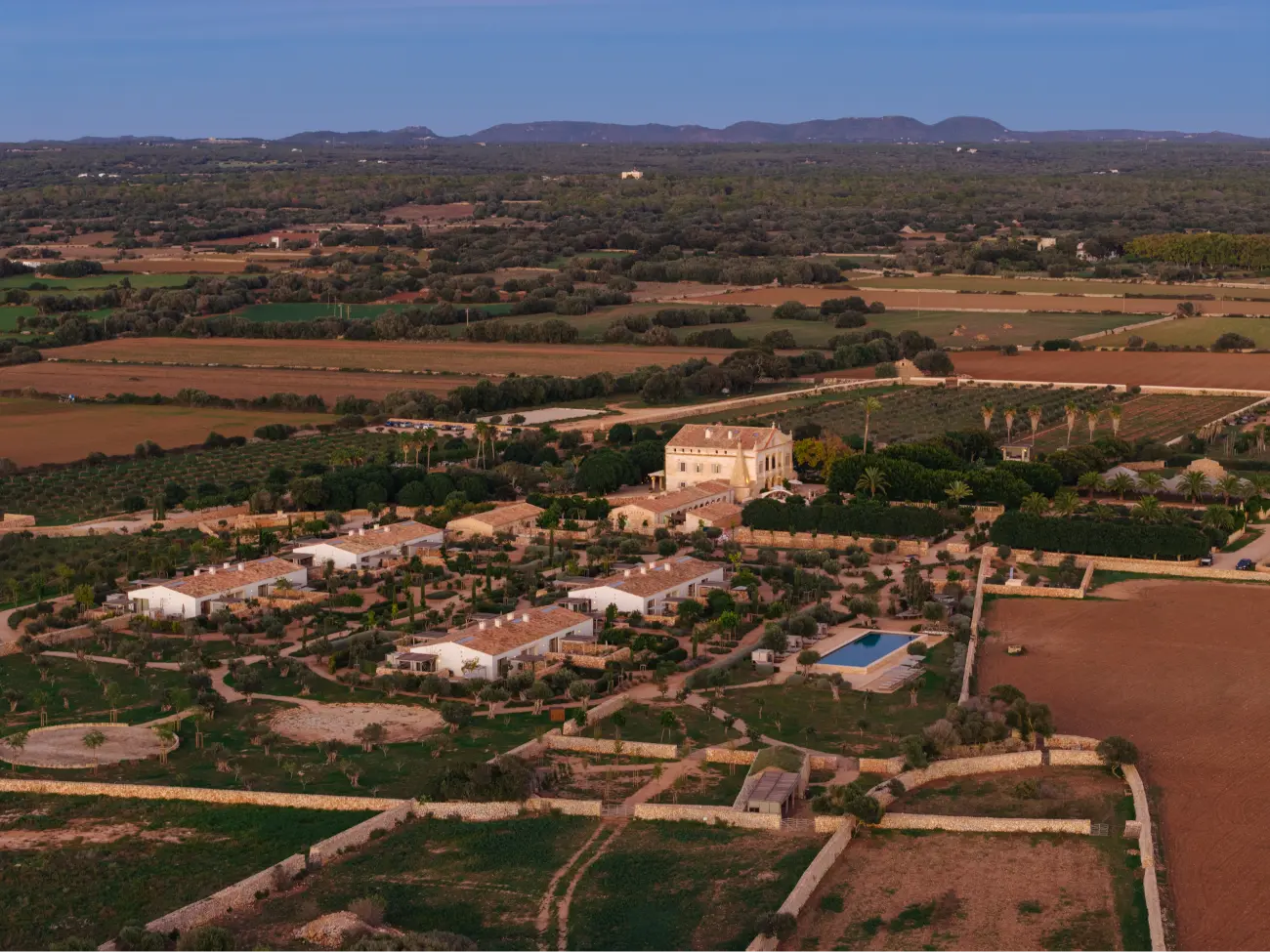
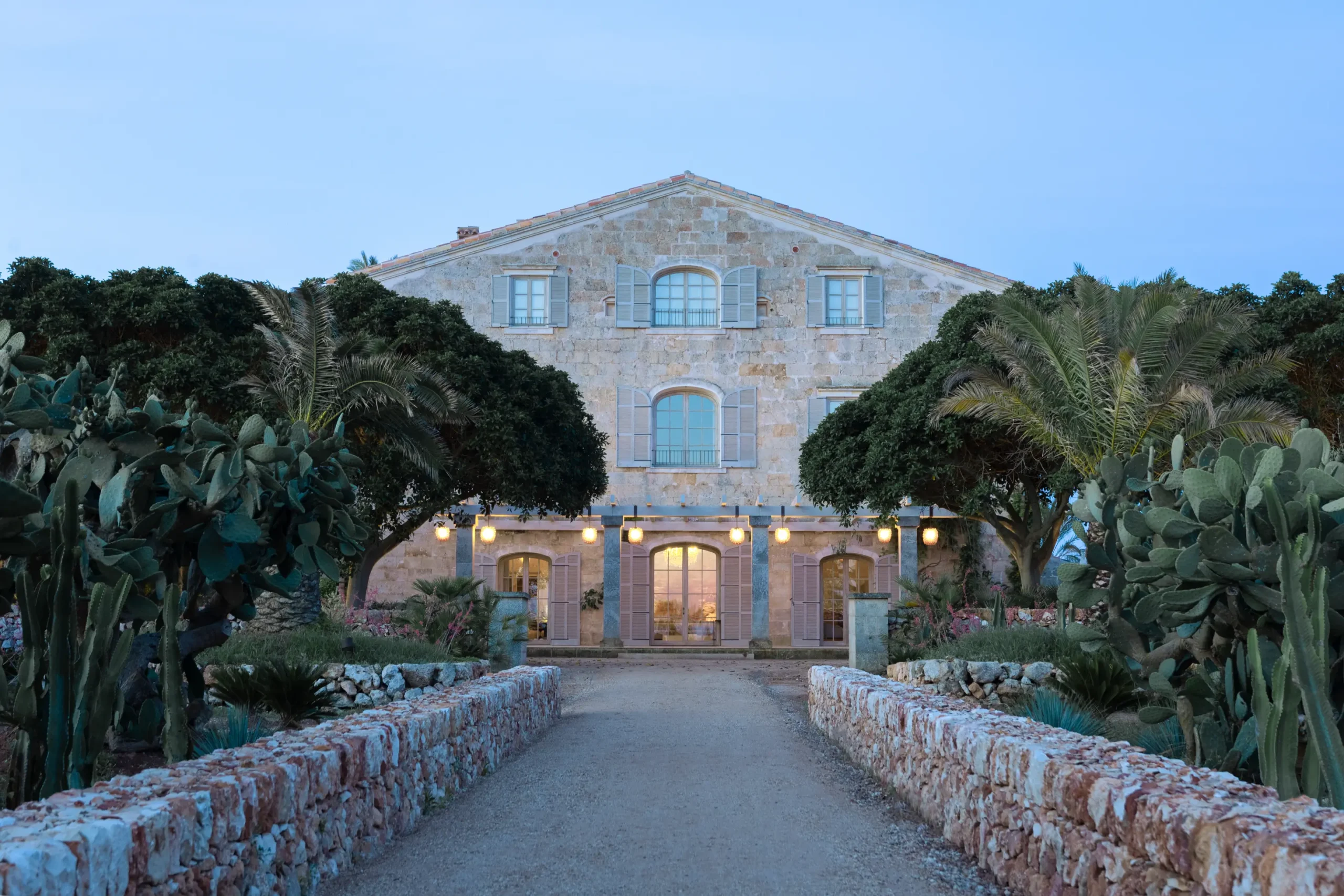
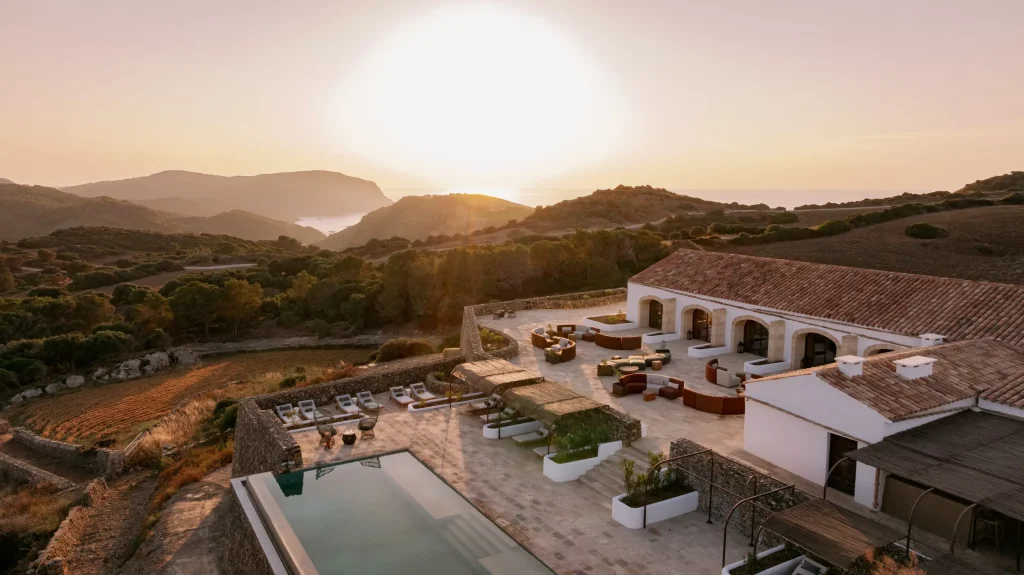
Son Vell is an estate set in the south of Menorca, overlooking a vast plain that stretches gently towards the sea and the cove that bears its name.
Positioned between cultivated land and coastline, the property reflects the refinement historically associated with Ciutadella’s noble families, while remaining intrinsically connected to its agricultural landscape.
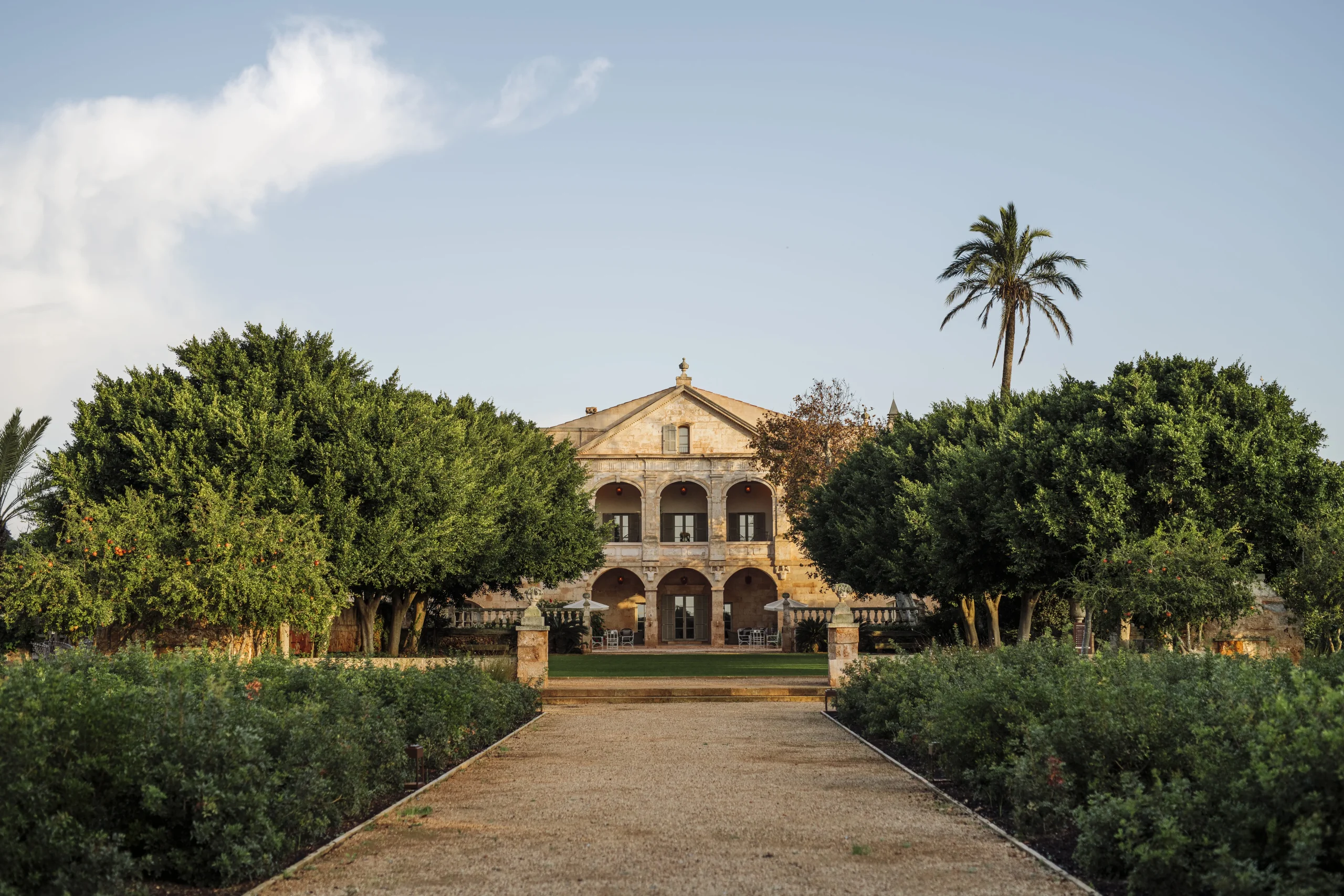
The estate was acquired in 1762 by the Menorcan nobleman Josep Vigo Squella. Although early records suggest that the original dwelling may have been modest, the property underwent substantial transformation during the late eighteenth and early nineteenth centuries.
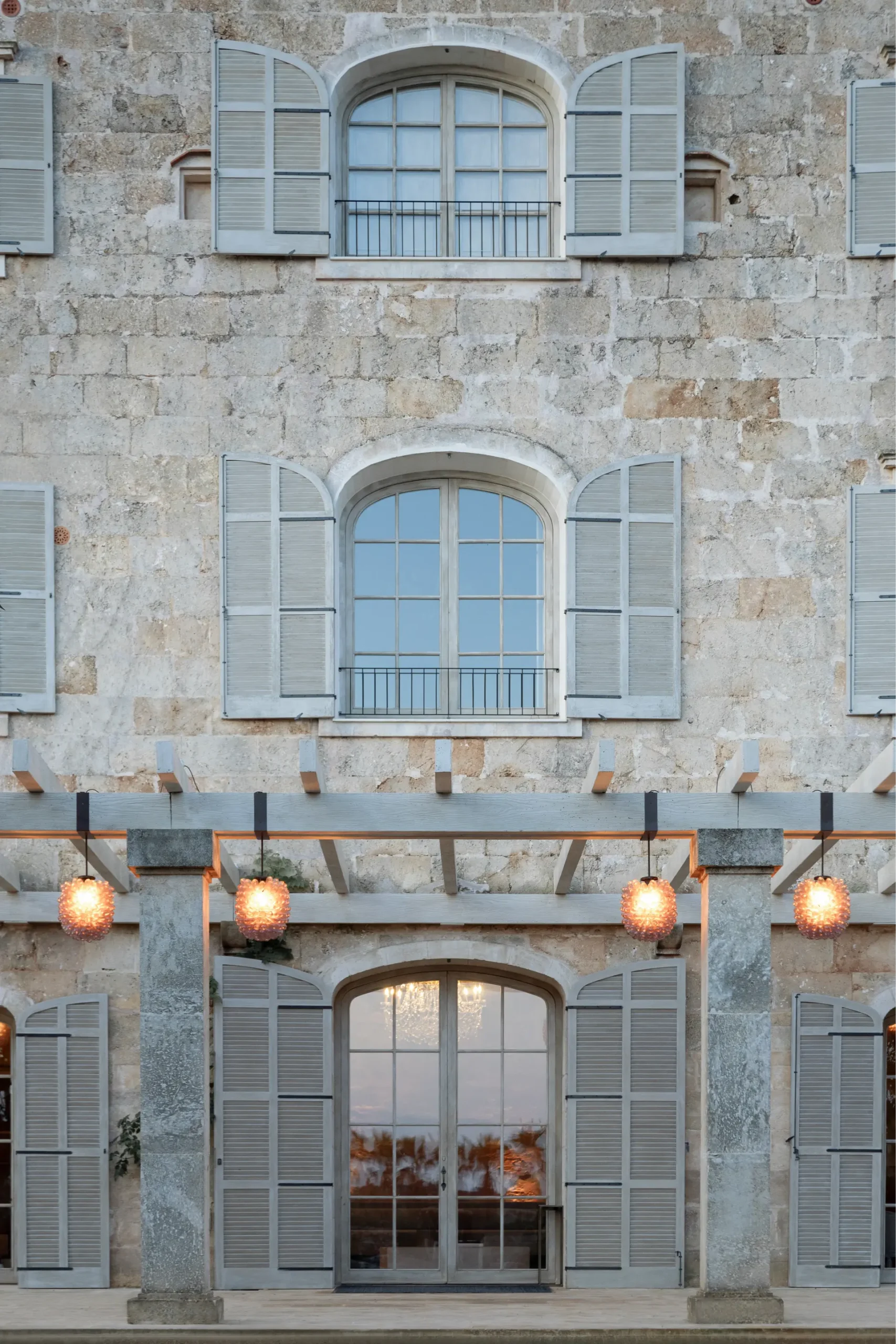
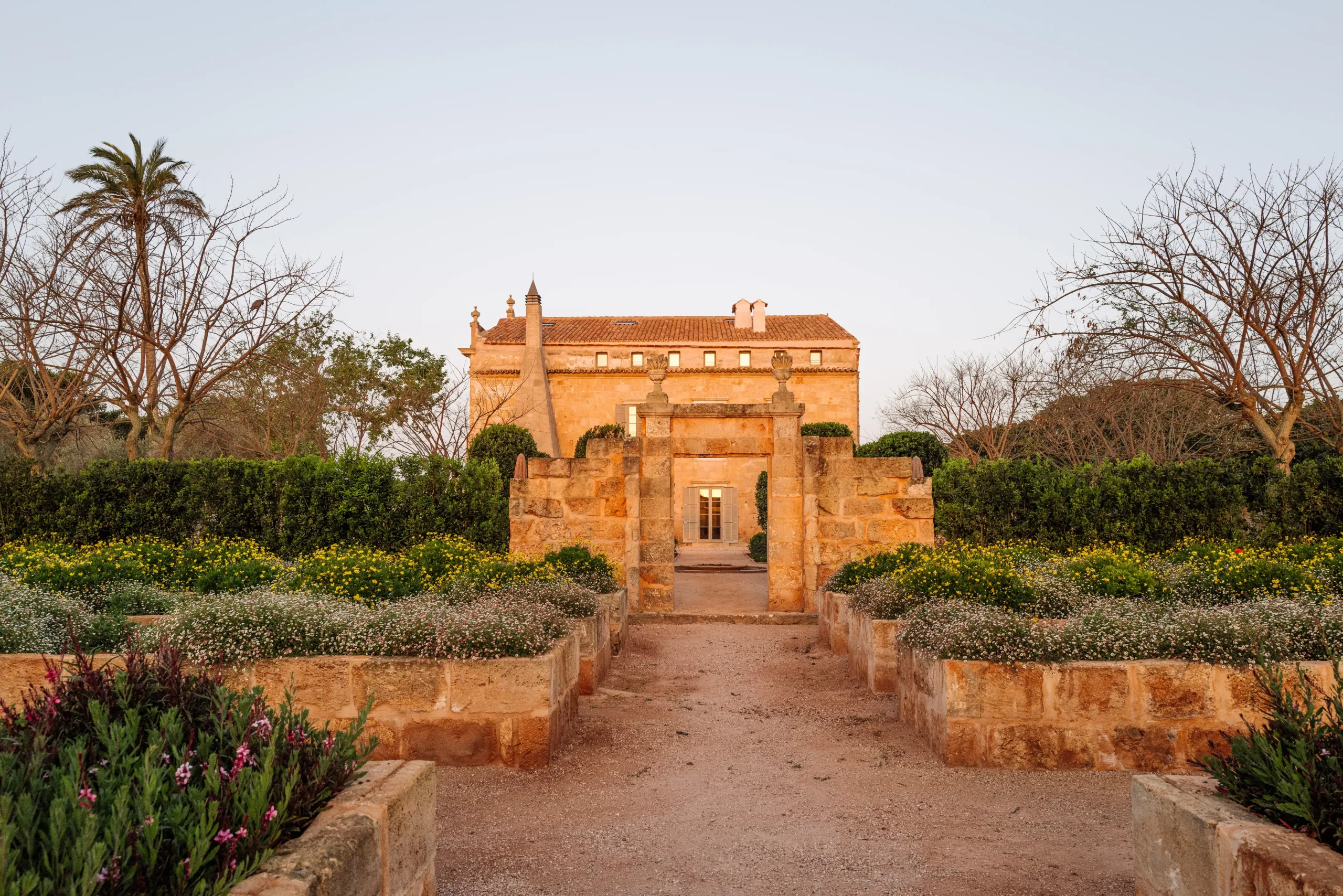
Architectural details, including sculpted eagles on the façade and a dated inscription from 1829, indicate that the principal remodelling into a Palladian villa likely took place during the 1820s, during a period of economic and cultural development on the island.
Historically, Son Vell functioned as an agricultural estate, its land supporting livestock and cultivation. This dual identity, noble residence and productive landscape, continues to define its character.
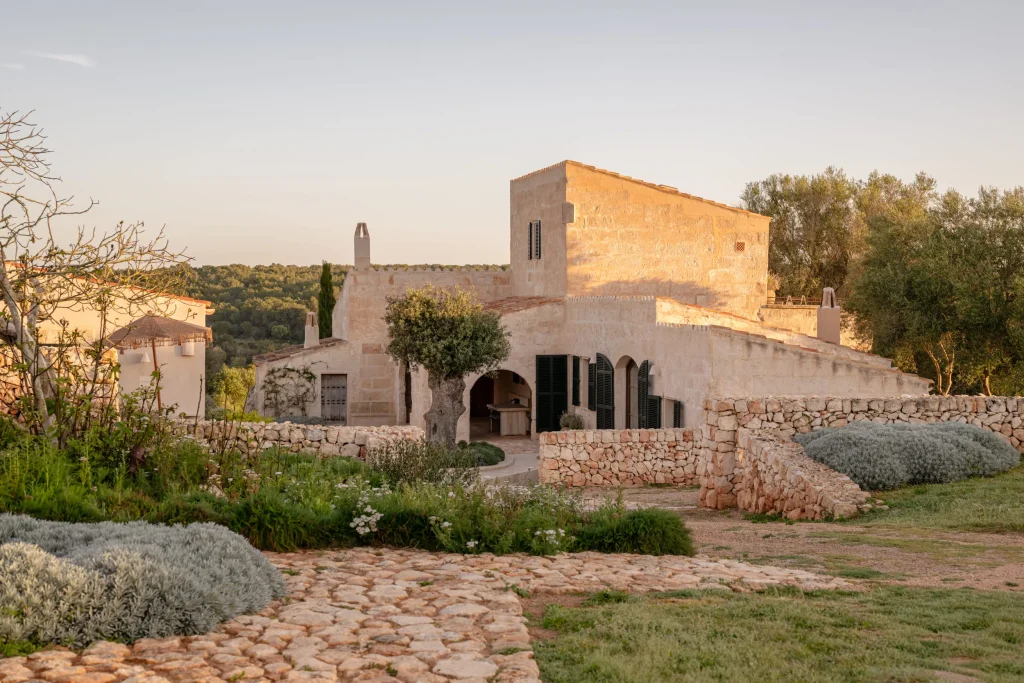
When first encountered, the principal house retained much of its architectural integrity, while the surrounding agricultural buildings showed signs of decline.
The restoration sought to respect both realities: preserving the grandeur of the villa while regenerating the ancillary structures with care and coherence.
From the outset, architecture, interior design and landscape were conceived as a unified vision. Early design stages focused not only on structural recovery but on atmosphere, ensuring that materials, craftsmanship and light would operate in quiet harmony.
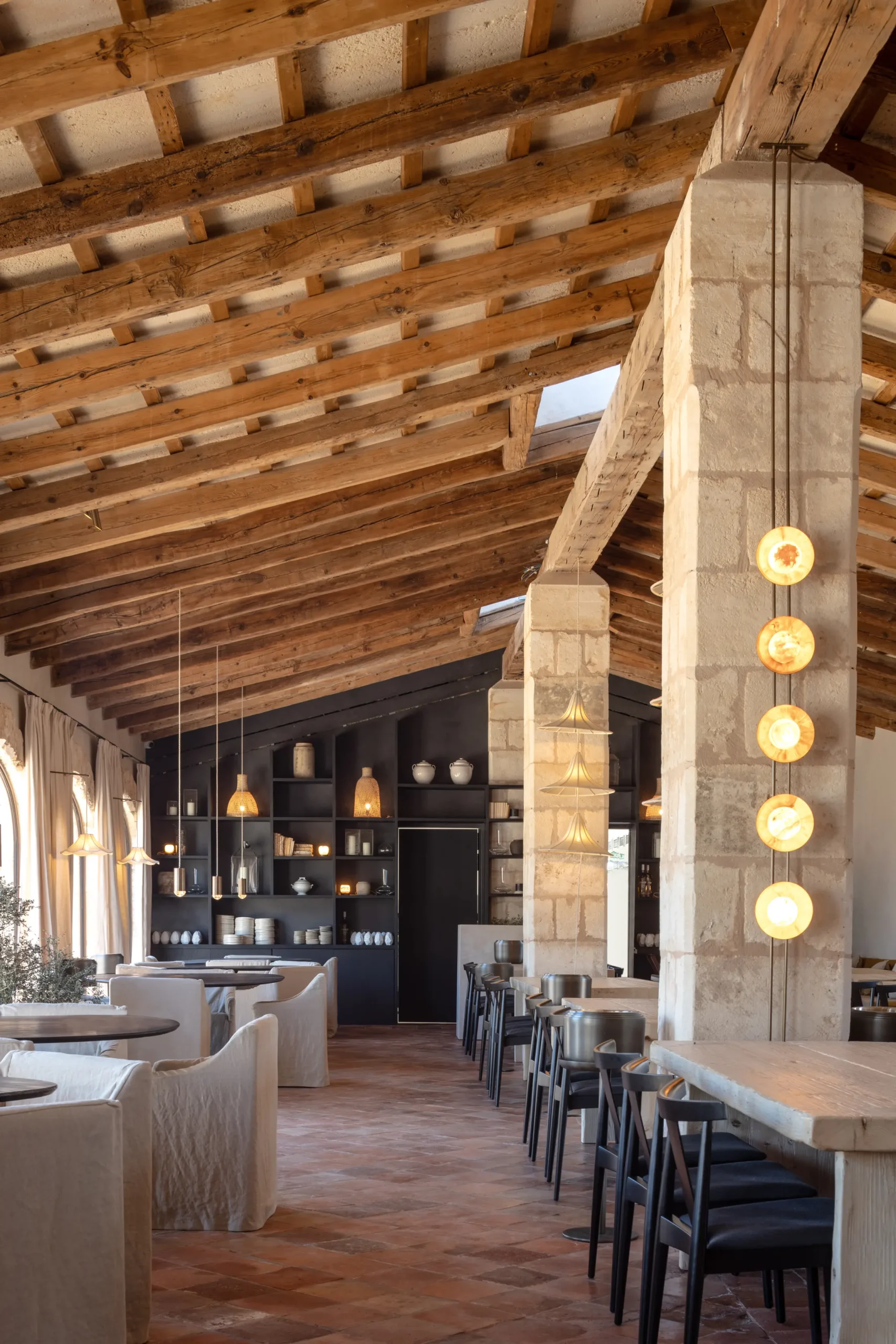
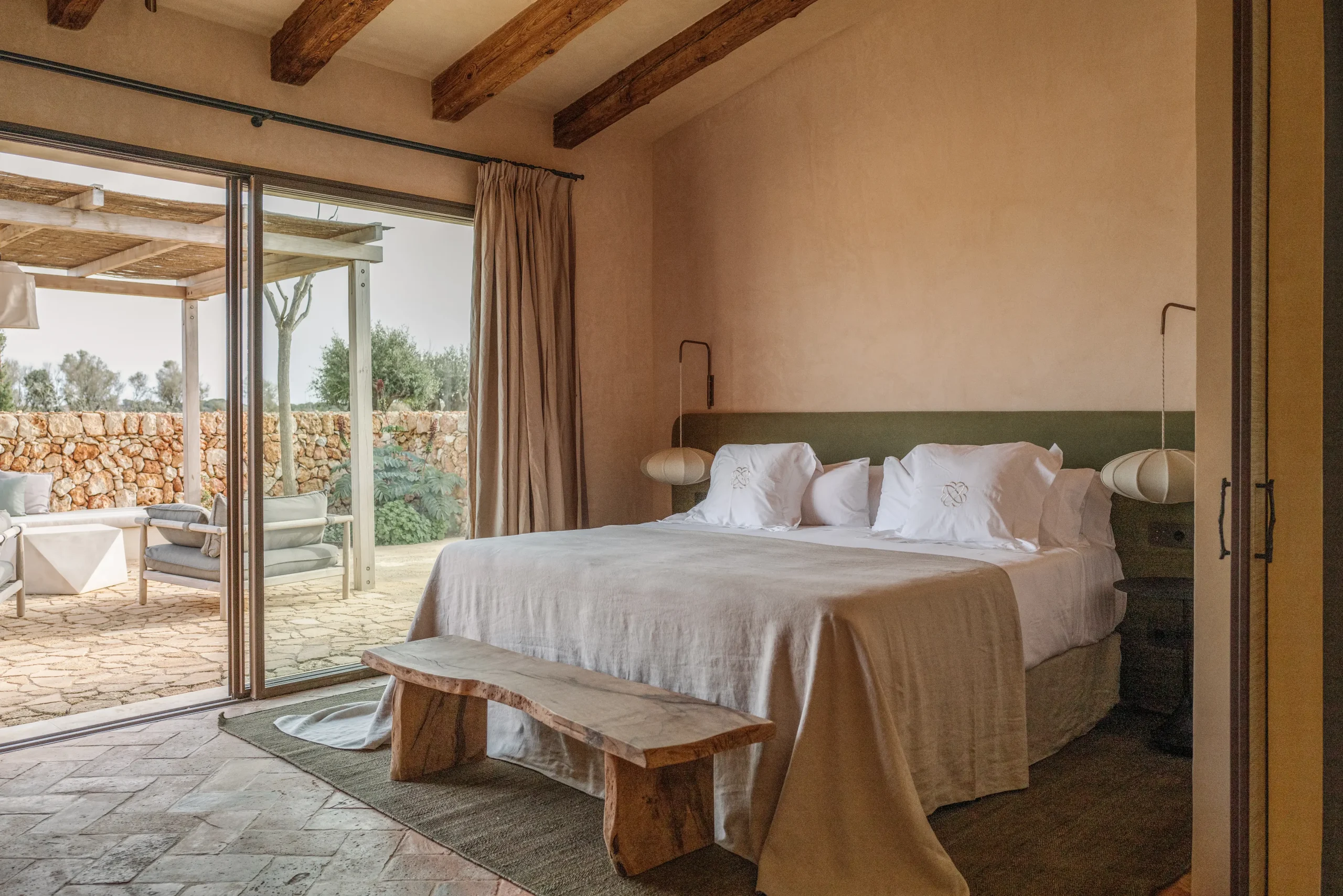
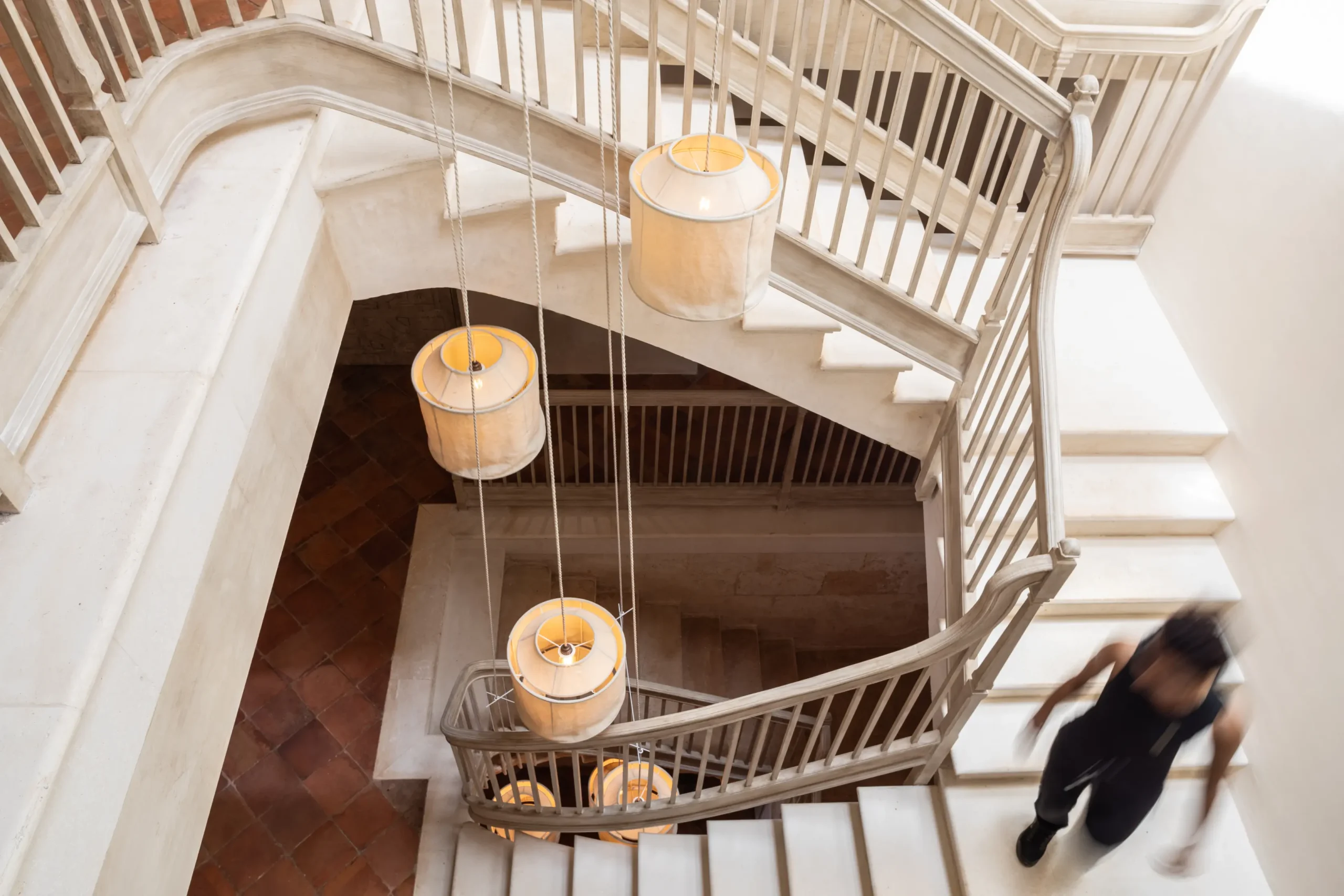
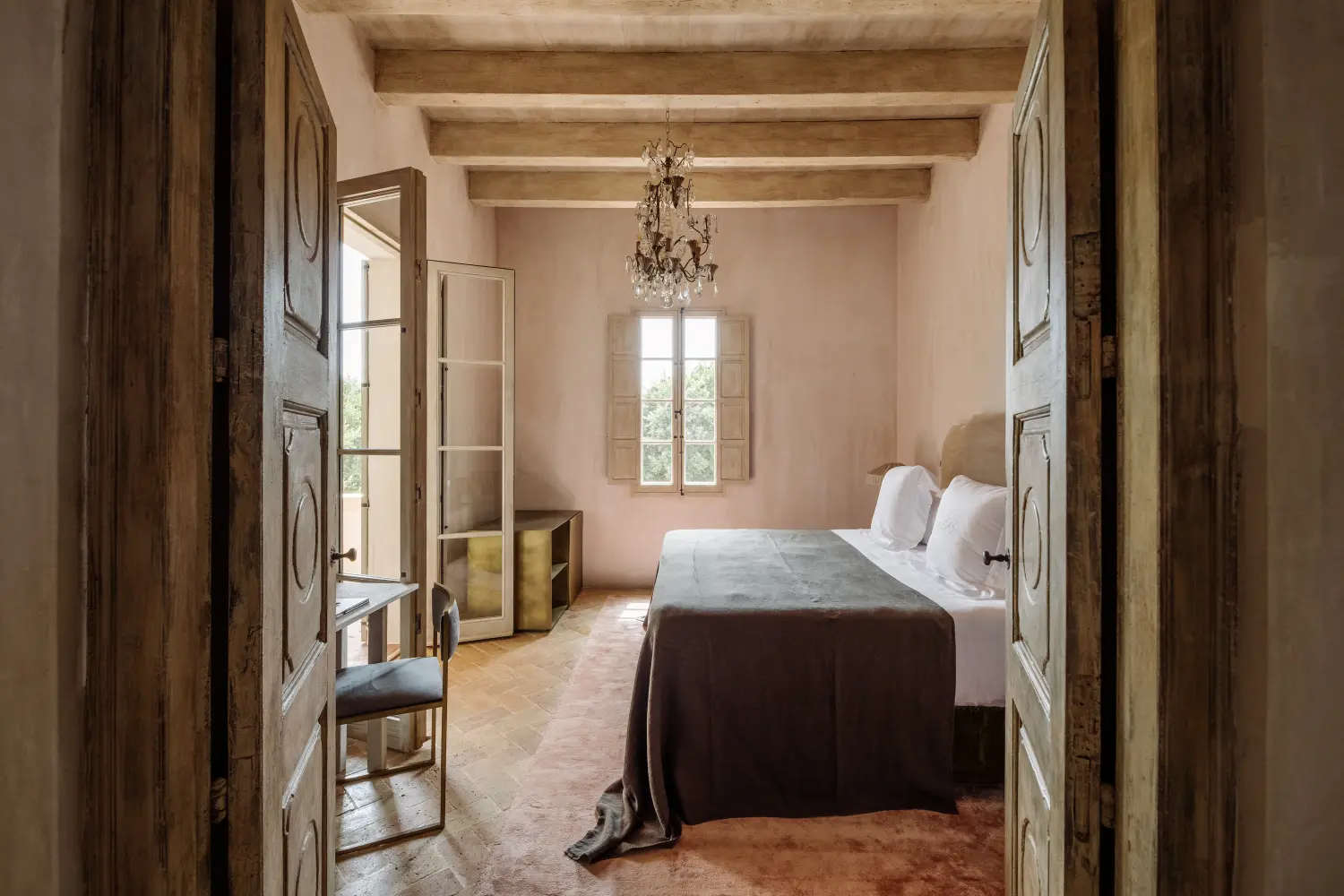
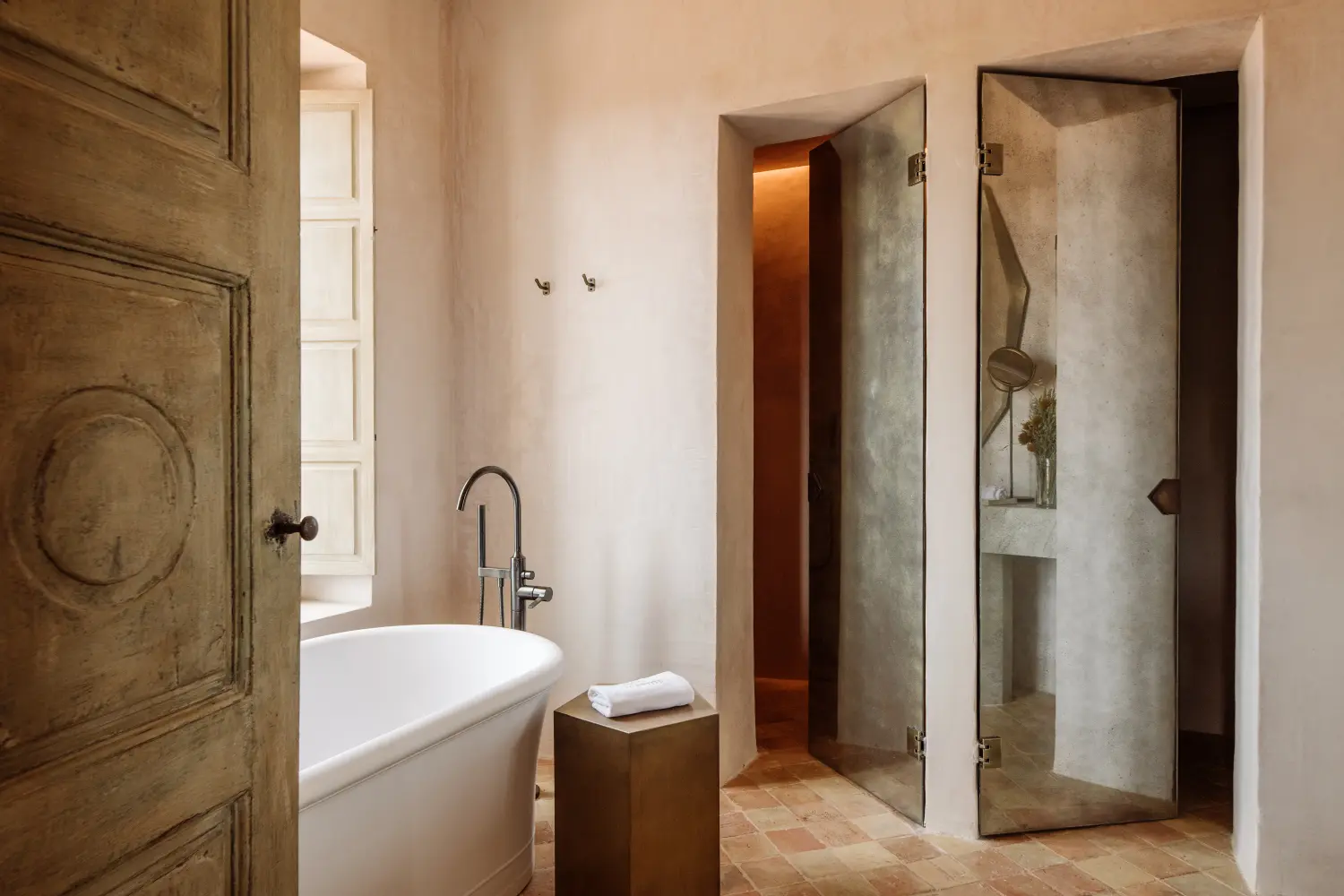
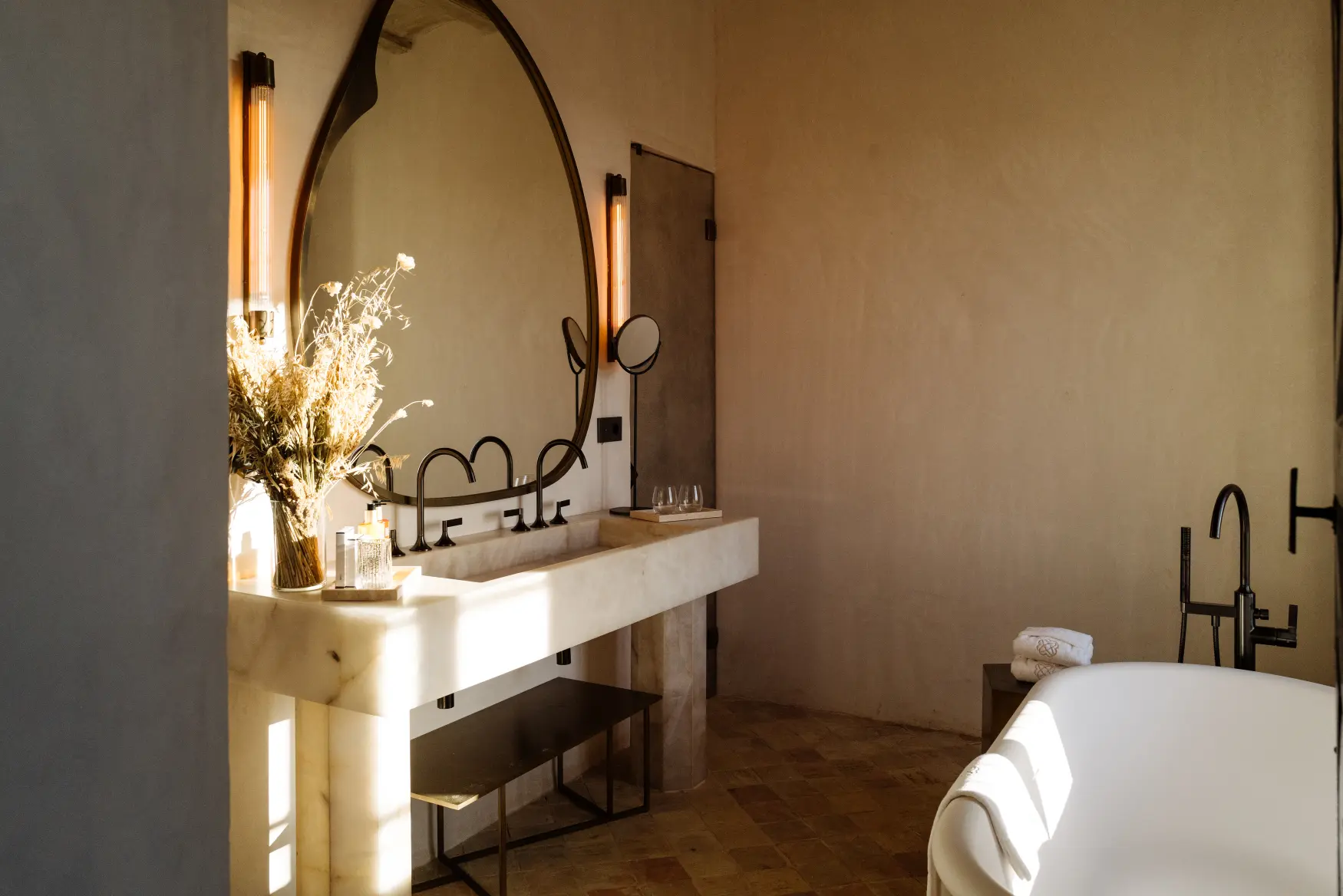
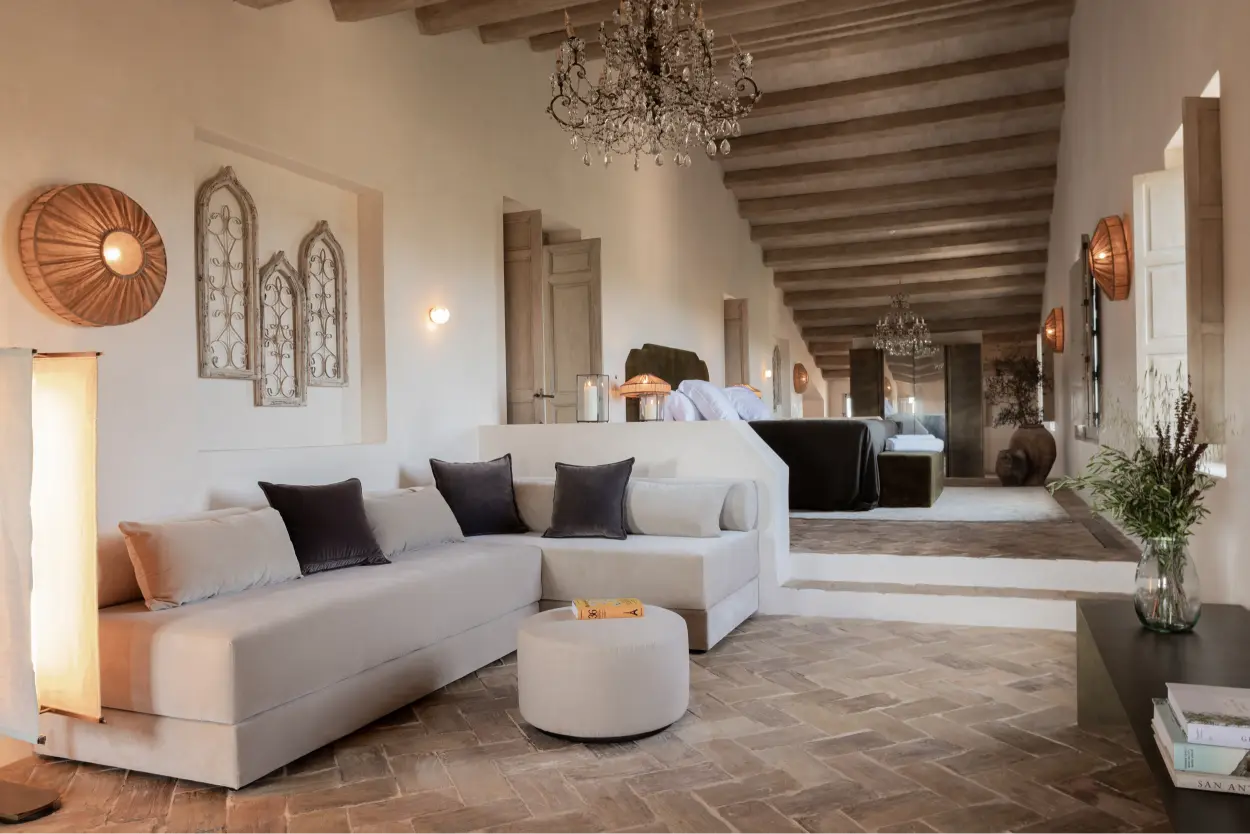
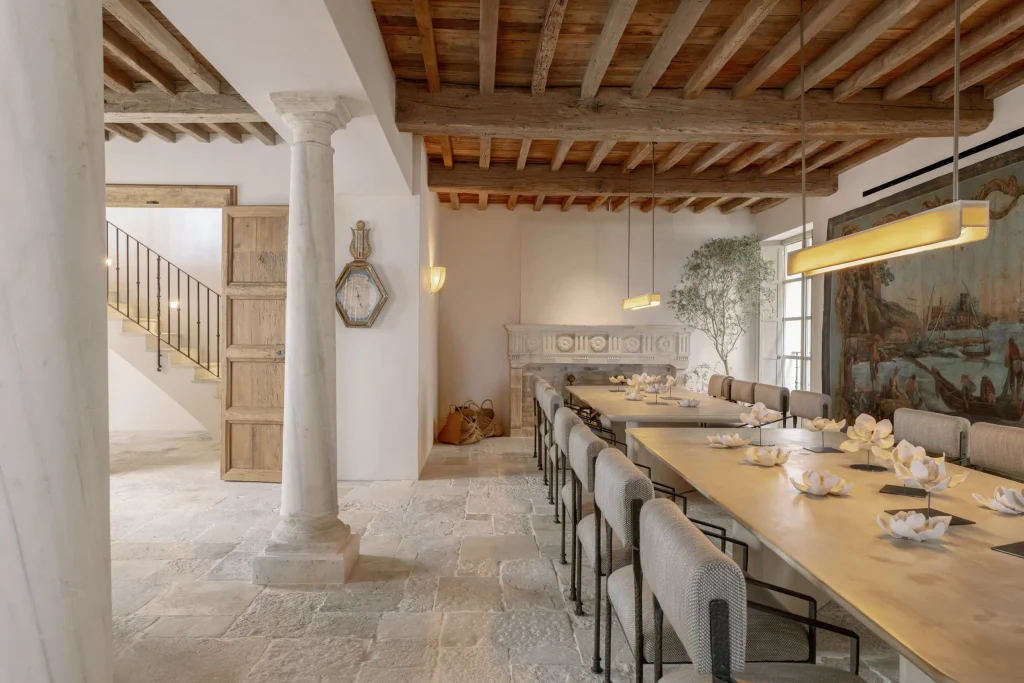
The principal architectural challenge lay in safeguarding the neoclassical language of the villa while discreetly integrating contemporary systems. Modern infrastructure was carefully concealed, allowing the historic structure to remain legible. Reclaimed timber beams, traditional terracotta floors and lime-plastered walls reinforce material continuity with the original building.
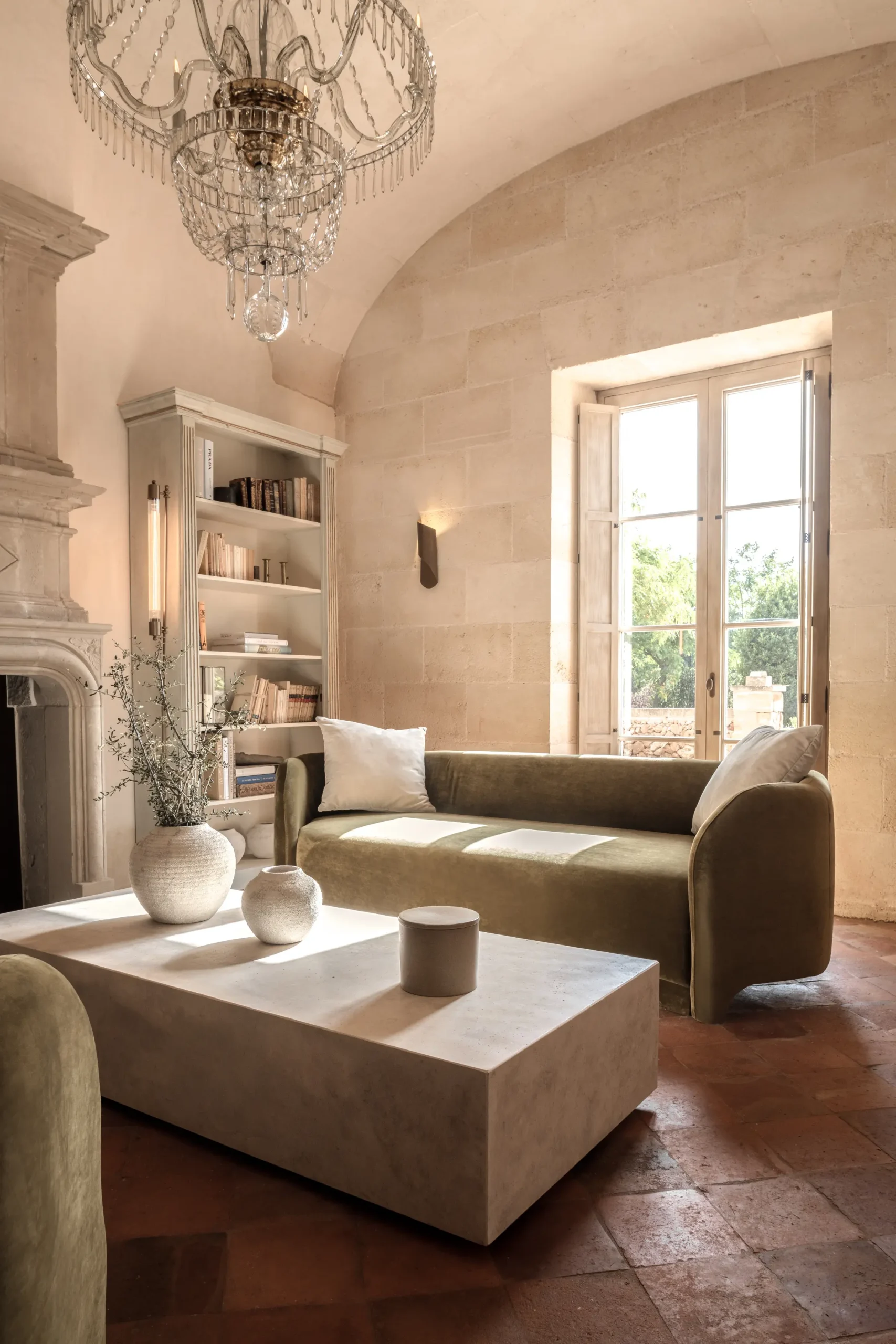
During the removal of later interior finishes, finely crafted marés stone masonry was uncovered beneath more recent layers.
Recognising the value of this craftsmanship, many of these walls were left exposed, allowing their texture and technique to become central to the renewed architectural narrative.
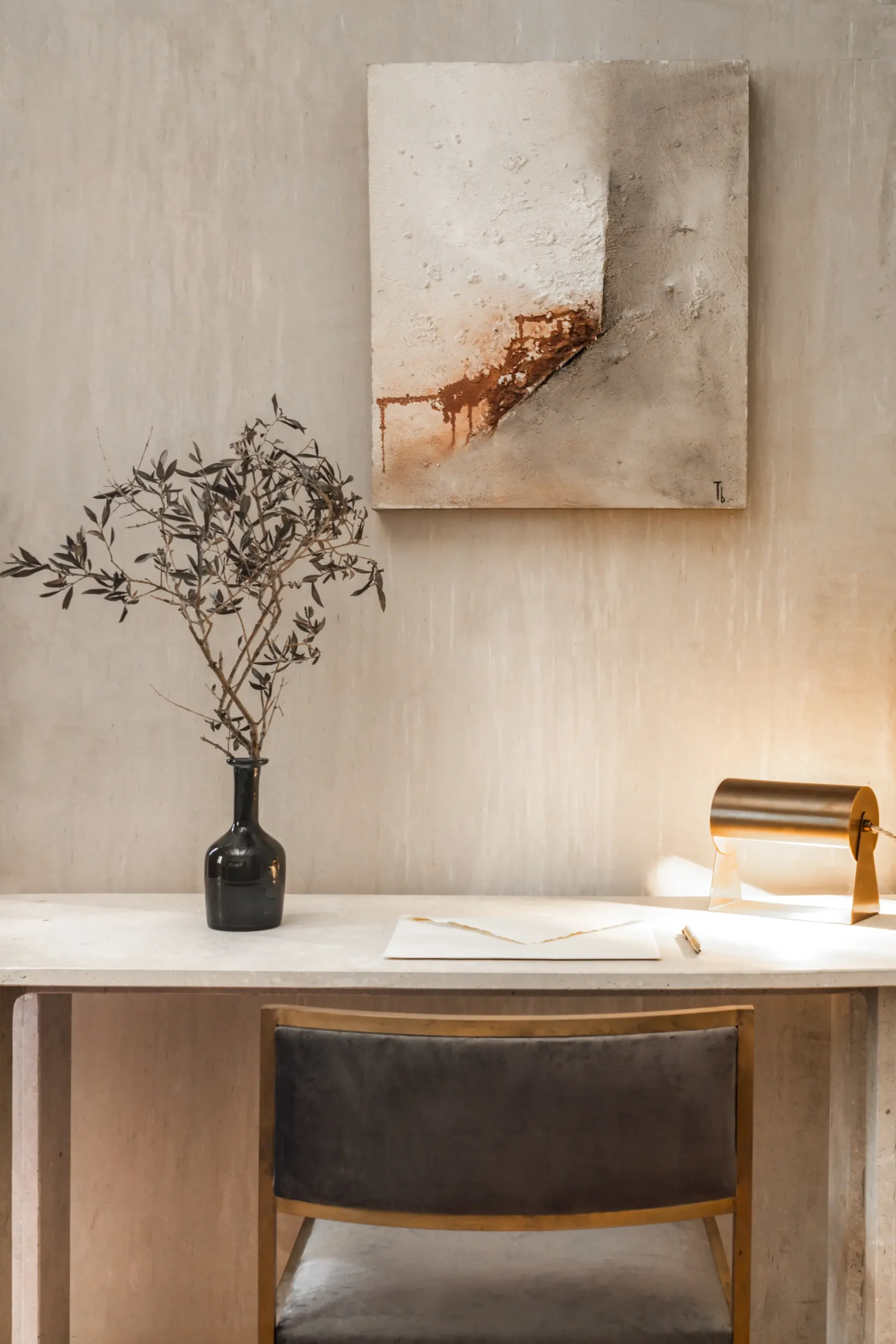
Interiors are guided by authenticity and material integrity. Soft furnishings and rugs are selected or commissioned in natural fibres such as linen, jute, silk and cotton, using only chemical-free dyes. The avoidance of toxins and plastics reflects a broader commitment to wellbeing, for both guests and the environment. Where new furnishings were required, they were designed specifically for the project and produced locally, ensuring coherence of material and origin.
Sustainability at Son Vell is understood as regeneration. Antique materials were reused wherever possible, traditional construction techniques were retained, and local artisans were engaged throughout.
Beyond the architecture itself, the estate cultivates a productive organic fruit and vegetable garden supplying the hotel’s kitchens. Additional produce is sourced from trusted local and organic suppliers, reducing food miles and reinforcing the estate’s agricultural continuity.
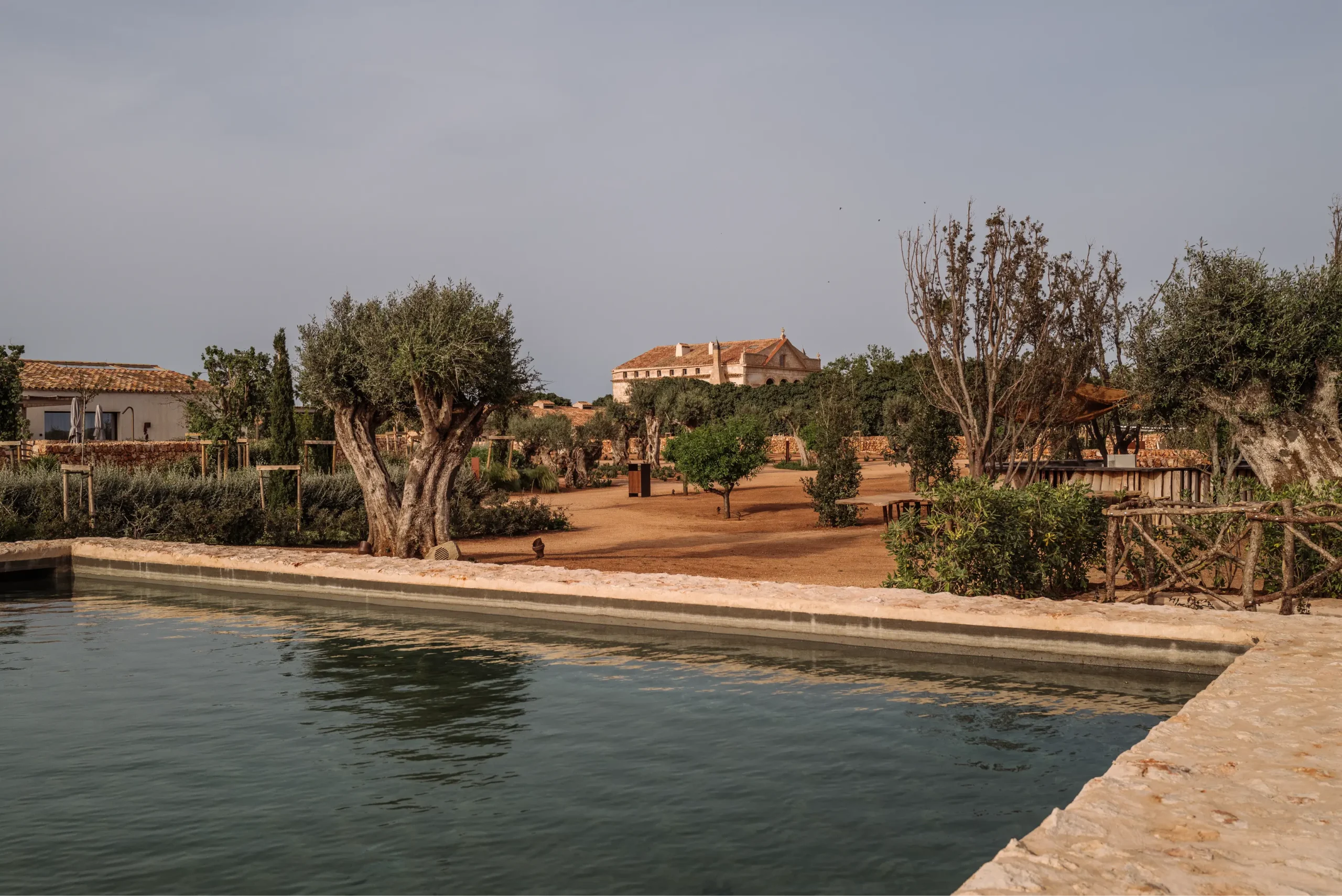
The landscape intervention was equally fundamental.
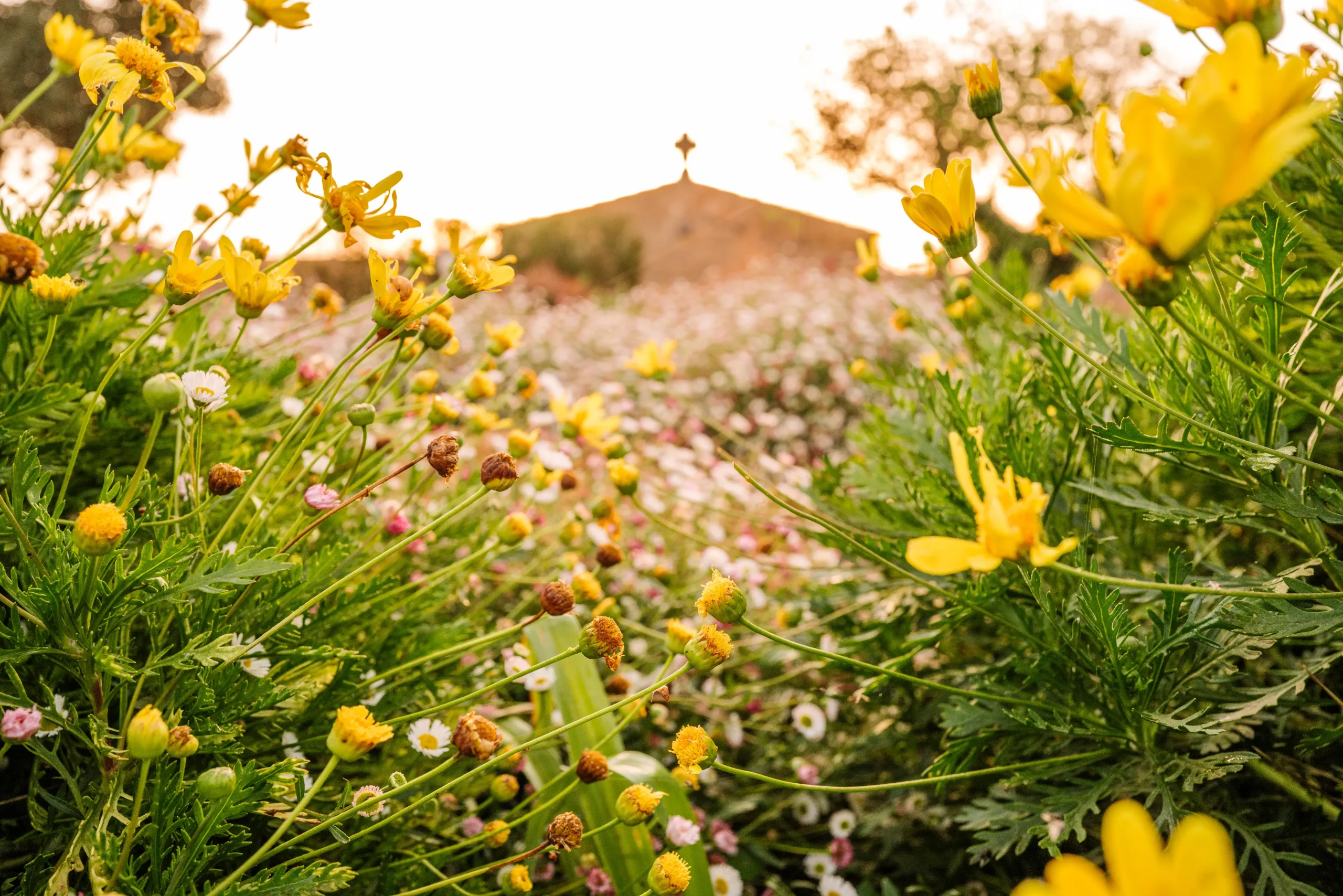
Located in an area of sparse vegetation, exposed to intense sunlight and vulnerable to erosion, the gardens required careful ecological consideration. A large selection of endemic and Mediterranean species has been introduced to improve biodiversity, strengthen resilience and reduce water consumption.
Native planting ensures ecological compatibility while creating the impression that the garden has always belonged to the site.
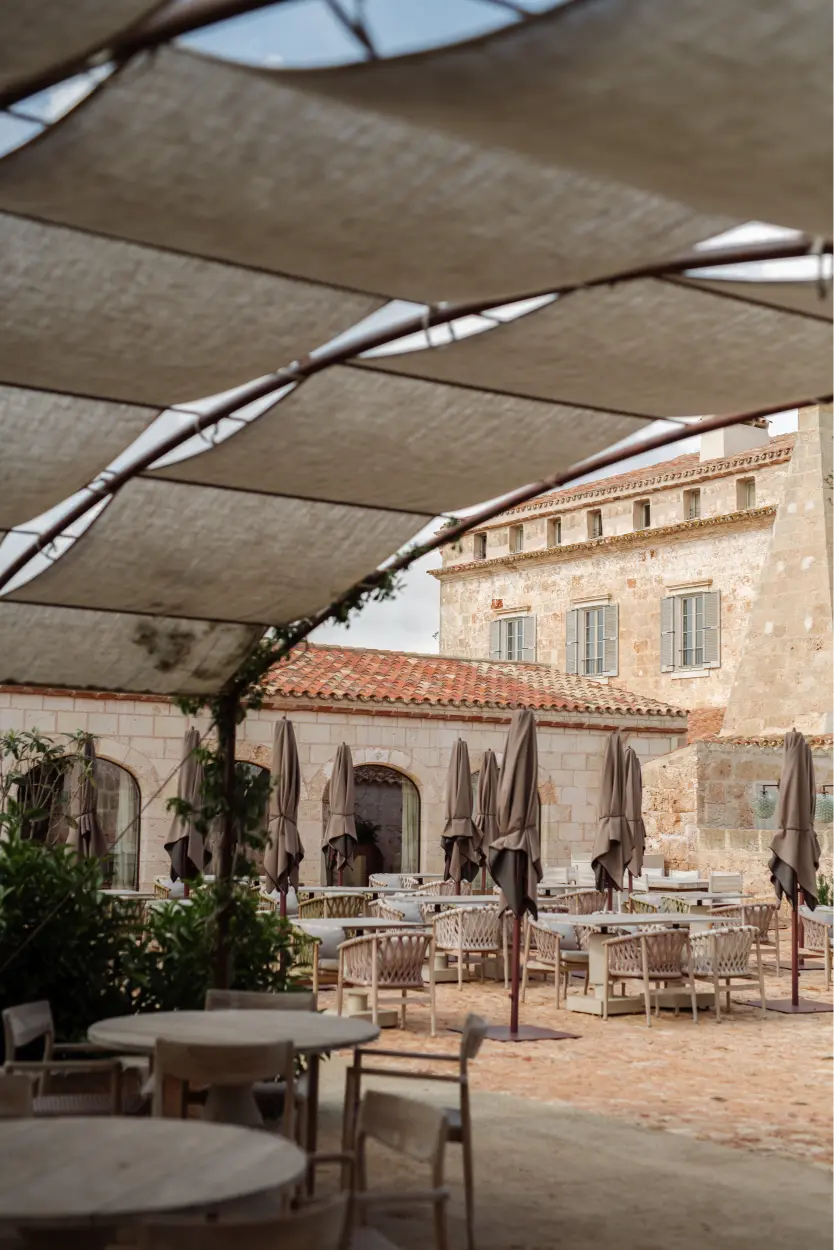
At the outset, the estate consisted of two distinct areas: a historic garden with formal features, and an agricultural zone surrounding service buildings with little vegetation. The historic garden has been preserved, restored and subtly enhanced, including the introduction of a rose garden, while new planting has structured the spaces around the villas. Through the careful placement of trees, hedges and low planting, intimate private gardens and terraces were created, offering shaded areas for walking and contemplation.
In total, 1,537 trees have been planted across the estate, reinforcing ecological regeneration and landscape continuity.
The success of Son Vell lies in its integrity. Guests encounter original terracotta floors worn by time, timber beams that carry centuries of history, restored doors shaped by earlier craftsmen and gardens that feel both curated and timeless. The building does not recreate the past, it extends it, allowing architecture, landscape and cultivation to coexist in quiet continuity.
PROJECT IMAGES